

The Affordable Care Act Promised Which Of The Following Free Preventive Service?
This week has seen the release of a Congressional Budget Function (CBO) analysis that refuted claims by opponents of the Affordable Care Act (ACA) that it is a "job killer" and demonstrated that, by giving families more options for obtaining affordable health insurance exterior the workplace, the ACA will brand it easier for people take a risk and get-go a concern, take time out of the labor strength to enhance a family unit, or retire when they are set.
As CBO made clear, even so, its analysis was not a comprehensive analysis of how the ACA will affect the labor market in particular or the economy equally a whole. This blog post illustrates 6 ways that the ACA is helping the labor market, laying the foundation for futurity economic growth, and improving families' fiscal security and well-beingness.
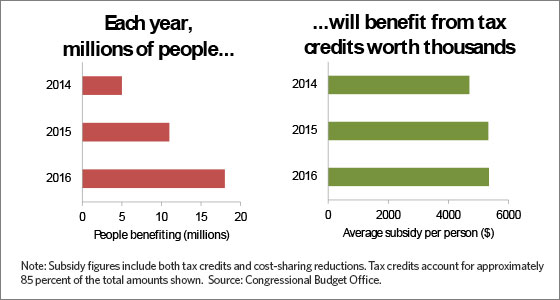
1. Putting more coin in families' pockets, boosting demand, and bringing down unemployment today. As of Jan 1, more than 2 million people had selected a program in the health insurance marketplace, and about 80 percent of those people will – thanks to the ACA – benefit from tax credits to help pay their premiums. All told, the Congressional Upkeep Office estimates that over the entirety of 2014, five million people will benefit from premium revenue enhancement credits and help with cost-sharing averaging $four,700 per person. In 2015, 11 million people are estimated to benefit, rising to nineteen one thousand thousand in 2016. Many millions more will gain affordable wellness insurance coverage through Medicaid.
These provisions of the ACA arrive easier for families to access health care services and to meet other pressing needs, which will increment the demand for goods and services throughout the economy at a fourth dimension when the unemployment rate is even so elevated. For this reason, as CBO Manager Doug Elmendorf testified, the ACA "spurs employment and would reduce unemployment over the next few years." The ACA is thus – today – helping ensure that every American who wants a job tin find one.
2. Helping deadening the growth of health care costs, boosting hiring in the nearly term, and bolstering workers' paychecks. The United States is currently experiencing a historic slowdown in the growth of wellness care costs. From 2010 to 2012 existent per-capita wellness spending grew at an average almanac rate of only 1.1 percent, and preliminary information and projections imply that this boring growth continued in 2013. The spending growth rates recorded over the concluding few years are the slowest on record, and less than one-third the long-term historical average of four.6 percent that stretches dorsum to 1960.
As documented in a report by the Council of Economical Directorate, the ACA is contributing to these trends through reforms to Medicare that reduce excessive payments to medical providers and private insurers and past deploying innovative new payment models that incentivize more efficient, higher-quality care. A growing torso of evidence suggests that, in addition to reducing costs and improving quality in Medicare, these ACA reforms may be generating similar benefits system-wide.
Slower growth in health care costs reduces the growth of the health insurance premiums paid by employers, which has important benefits for workers. In the short run, lower health insurance premiums reduce the toll of hiring an boosted worker, making it easier for employers to add together jobs. Ane study co-authored by a leading health economist found that reductions in health care cost growth due to wellness care reform could increment task growth past 250,000 to 400,000 per yr by the second one-half of this decade.
Economic enquiry shows that, over time, an increasingly large fraction of the premium savings are passed on to workers in the form of higher wages. If only one-third of the recent slowdown in wellness care cost growth persists, the savings after a decade will amount to $1,200 per person, much of which volition show up in worker'south paychecks as higher wages.

3. Reducing our long-term arrears and laying the foundation for future growth. The Congressional Upkeep Office (CBO) has estimated that over fiscal years 2013 through 2022, the ACA will reduce the deficit past $109 billion. The ACA's arrears-reducing furnishings will grow over time. CBO estimates that over the decade from 2023 through 2032, the ACA will reduce the deficit past an average of 0.five pct of GDP each year, corresponding to total deficit reduction of nearly $1.half-dozen trillion over that ten-twelvemonth period. Lower long-term deficits due to the ACA will hateful college national saving, which will increase capital accumulation and reduce foreign borrowing, thereby making workers more productive and increasing national income and living standards over time.

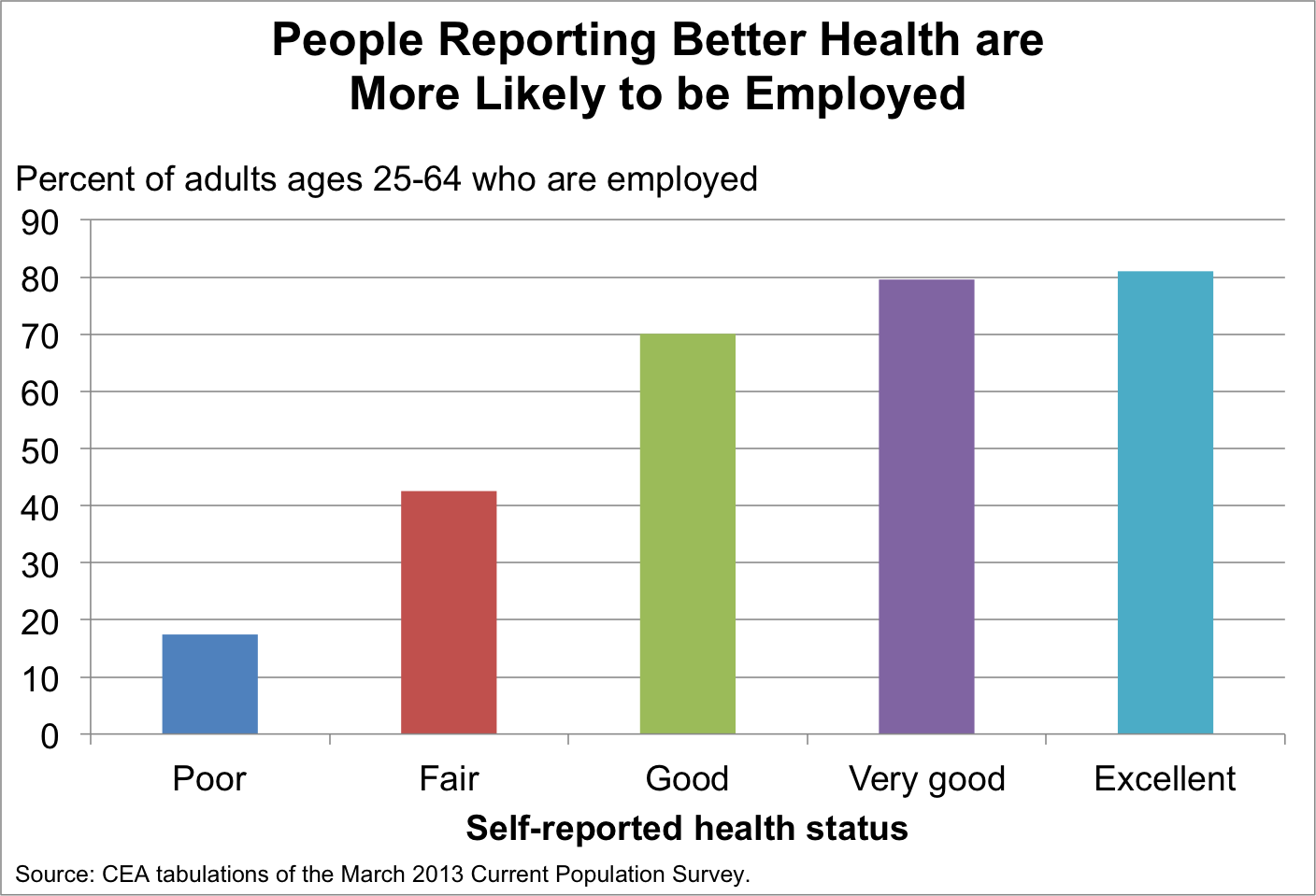
4. Improving health and making workers more productive. The ACA is improving health both for people who would otherwise non have had health insurance and for people who are already insured.
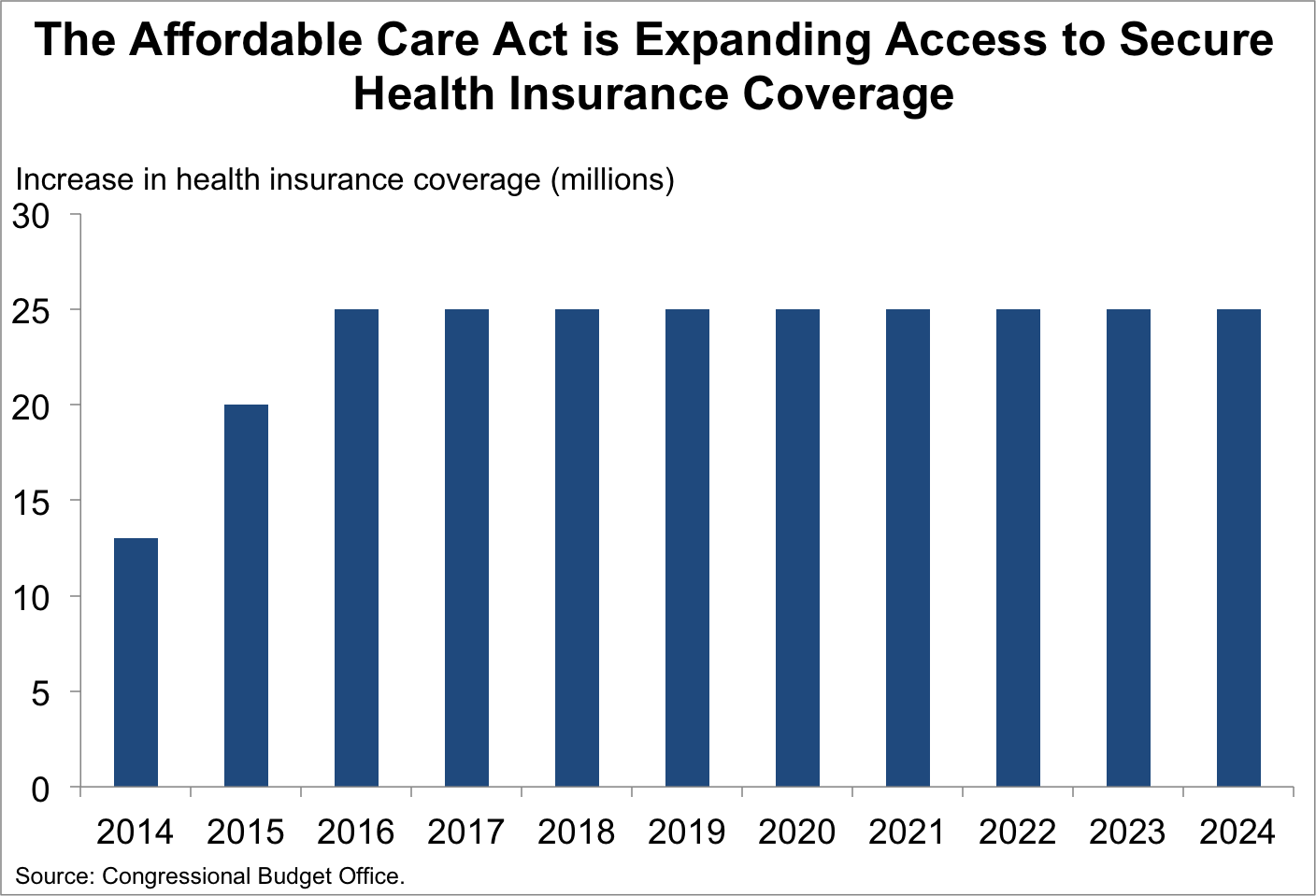
By expanding coverage, the ACA volition expand access to needed medical intendance. Greater access to care equally a effect of being insured has been shown to reduce mortality, improve mental health, and improve self-reported health condition. For Americans who had coverage before the ACA, the ACA guarantees access to preventive services recommended by the The states Preventive Services Task Forcefulness without price-sharing, services that take been proven to amend health and relieve lives. Since 2010, more than than 71 million Americans accept received at least one preventive service without cost-sharing.
In addition, the ACA is helping to meliorate the quality and efficiency of intendance for all Americans, contributing to better health outcomes while reducing costs. One striking instance comes from an ACA initiative that gives hospitals incentives to reduce the number of patients returning to the infirmary subsequently discharge, such as past ensuring higher-quality care during the initial hospital stay or making appropriate arrangements for where patients will receive intendance after discharge. Medicare has too funded community-based organizations that aid patients motion more smoothly from a hospital stay to intendance at home. Hospitals take responded to these programs, and, over the last 3 years, Medicare 30-solar day hospital readmission rates take turned sharply lower, and are at present more than a percentage point beneath their average level from 2007 to 2011. Through August 2013, this reject corresponded to 130,000 avoided infirmary readmissions.
People who alive longer, healthier lives will miss fewer days of work, are less probable to become disabled, volition tend to spend more years in the workforce, and will be more productive while on the chore.
5. Reducing "job lock" and encouraging job mobility and entrepreneurship. Before the ACA, many Americans' merely source of secure health insurance coverage was through their jobs. For people with pre-existing medical conditions, purchasing coverage on their own was often unaffordable or even impossible since insurance companies could just refuse to provide coverage. For others, buying coverage on their own meant living with the fear that their insurer would raise their premiums without warning or even abolish their policy birthday. This could have the event of locking workers into jobs. As economists at the Heritage Foundation wrote earlier passage of the ACA: "Individuals who wish to have a better job, change careers, or leave the workforce to raise a family or to retire early accept substantial risks…This health insurance obstacle to labor mobility is sometimes called 'job lock.'"
Because of the ACA's ban on discrimination against people with pre-existing conditions and its other stiff consumer protections, all Americans now have secure access to wellness insurance, whether or not they can go coverage through their workplaces.
This guarantee of access to health insurance has a variety of economical benefits. Access to wellness insurance outside the workplace allows people to structure their careers in ways that make sense for them, similar by taking time off to enhance a family or past retiring when they want to. It too allows people to take risks that farther their careers and benefit the economy equally a whole, like going part-time in order to go back to schoolhouse, leaving a chore in order to get-go a business, or moving to a amend job, possibly at an employer that does non offer coverage. While the empirical testify on the magnitude of these types of responses is incomplete (and in some cases mixed), there is no doubt that job lock presents an economical challenge. By increasing workers' mobility across jobs, secure access to wellness insurance helps them to find the task that is best for them—and thus increases overall wages and productivity. Moreover, reducing task lock encourages entrepreneurship, a critical ingredient for growth and job cosmos.
half-dozen. Improving financial security in the confront of illness. By expanding access to affordable health insurance coverage, the ACA is helping to ensure that getting sick no longer ways financial ruin. Recent research examining an expansion of Medicaid coverage in the State of Oregon confirmed the important role that having insurance plays in ensuring financial security. The study, which used a "gold standard" randomized research pattern constitute that gaining admission to wellness insurance coverage through Medicaid "most completely eliminated" catastrophic medical costs (divers as medical costs in excess of xxx percentage of income).
In addition to expanding coverage, the ACA is improving financial security for families who accept coverage today. Because of the ACA, all insurance plans sold in the United States must cap enrollees' annual out-of-pocket spending, and insurance companies can no longer sell low-quality policies with annual or lifetime limits on coverage. The ACA is also improving fiscal security for seniors by phasing out the Medicare Part D "donut pigsty." Since the enactment of the ACA, these provisions saved seven.3 million Medicare beneficiaries an average of about $i,200 per person on prescription drugs. Overall, better fiscal protection makes an essential contribution to the well-being of families and thus the overall health of the economy.


The Affordable Care Act Promised Which Of The Following Free Preventive Service?,
Source: https://obamawhitehouse.archives.gov/blog/2014/02/06/six-economic-benefits-affordable-care-act
Posted by: jacksontallay.blogspot.com
0 Response to "The Affordable Care Act Promised Which Of The Following Free Preventive Service?"
Post a Comment